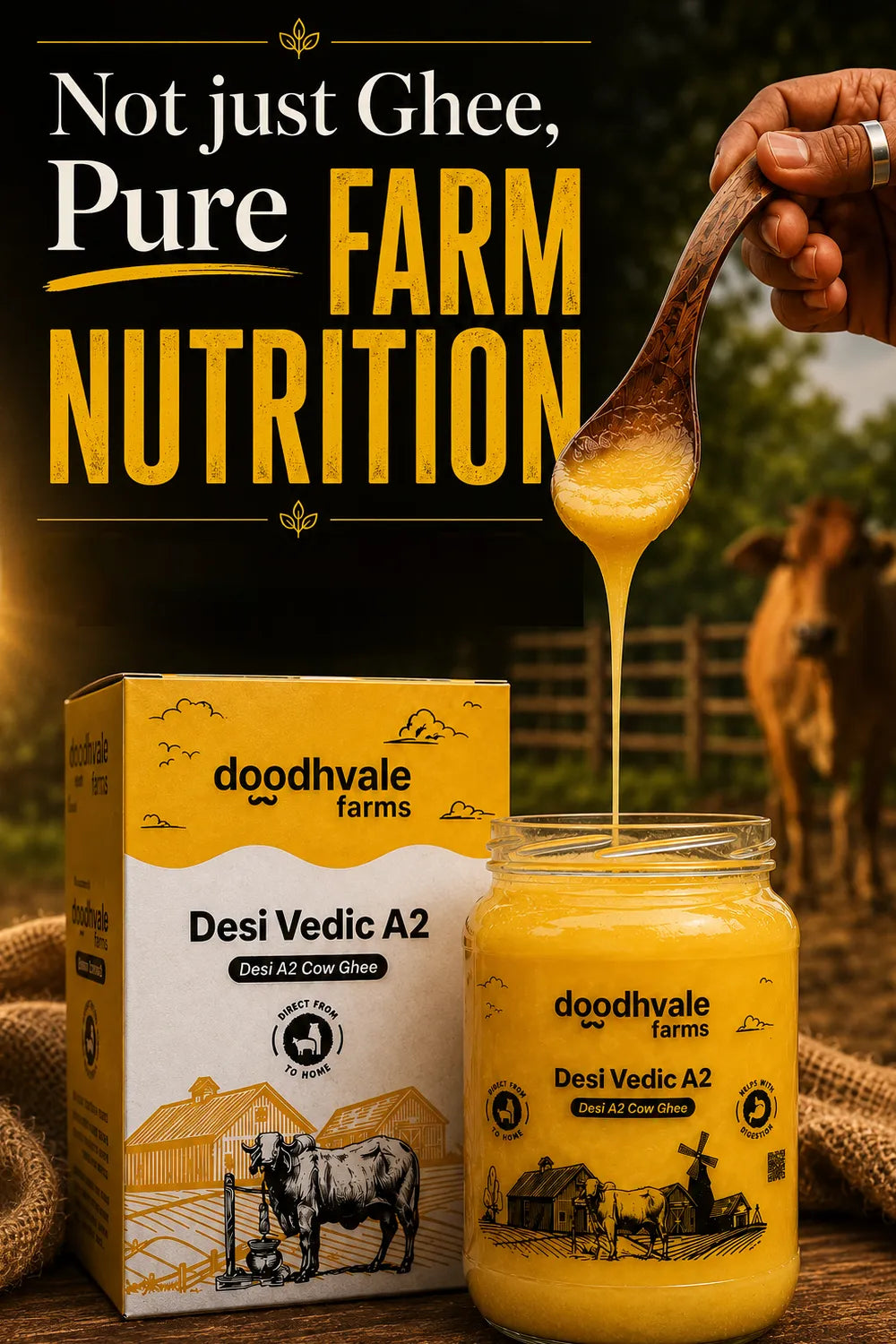
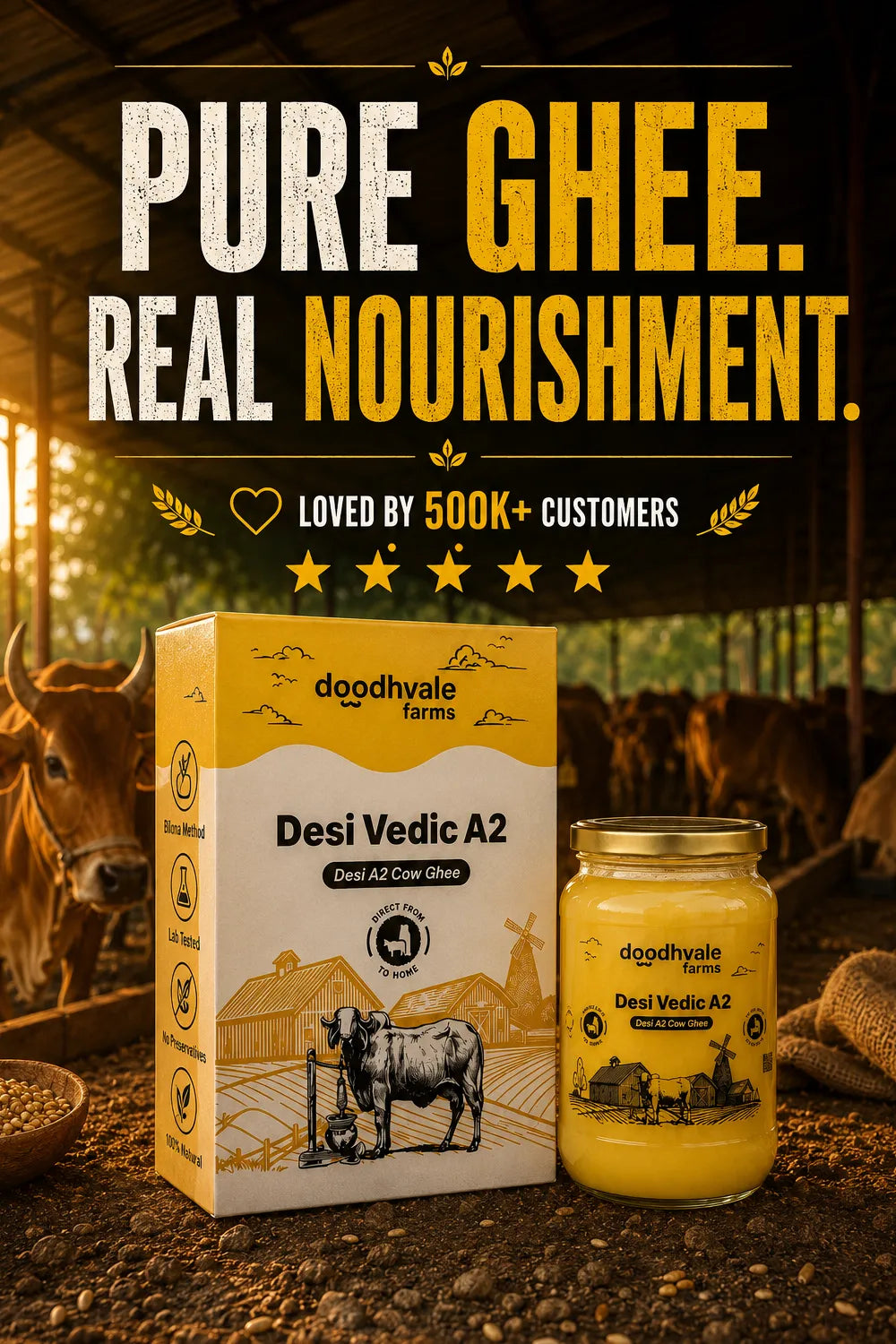






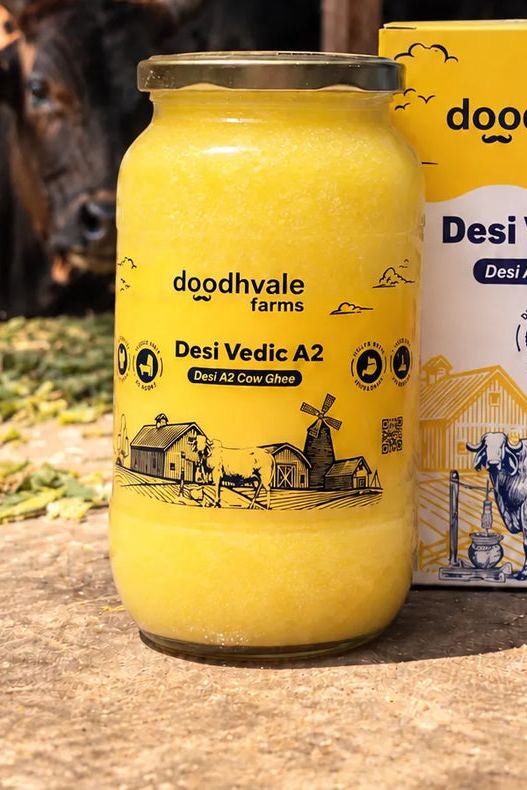
Cow A2 Desi Ghee
- Bilona churned
- Made from A2 Cow Milk
- 70+ quality checks
- Low Glyphosate
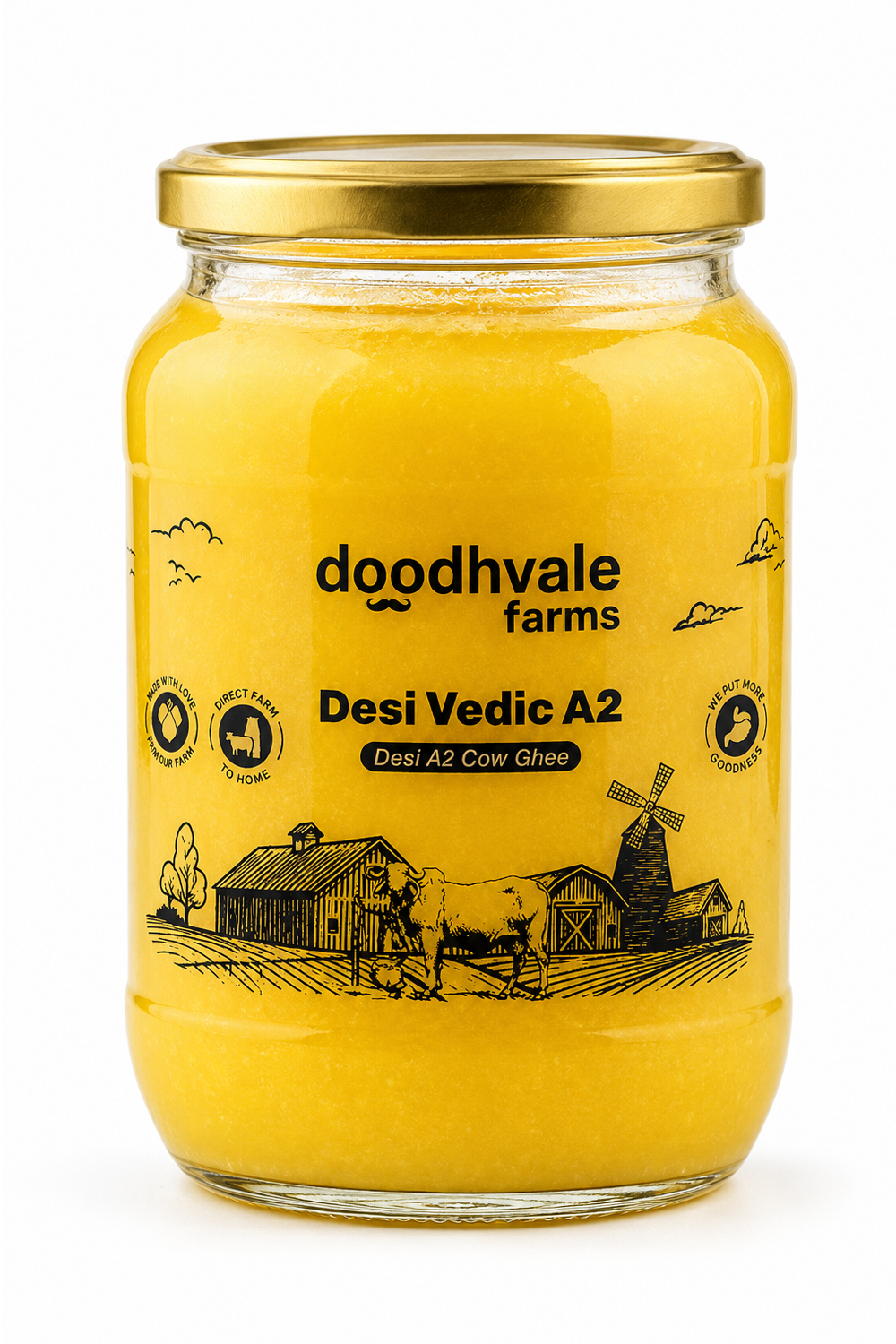
What makes Cow A2 Desi Ghee different?
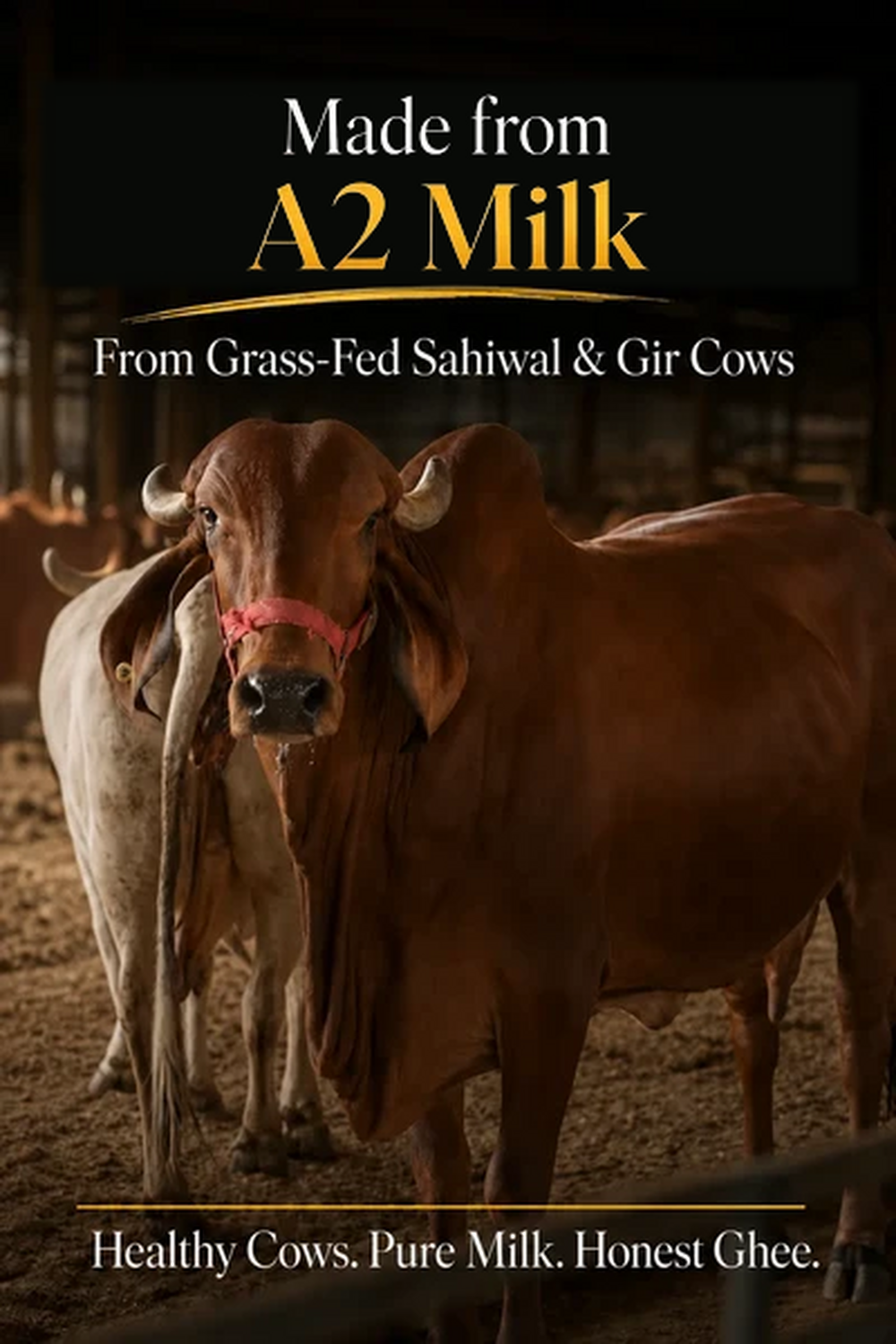
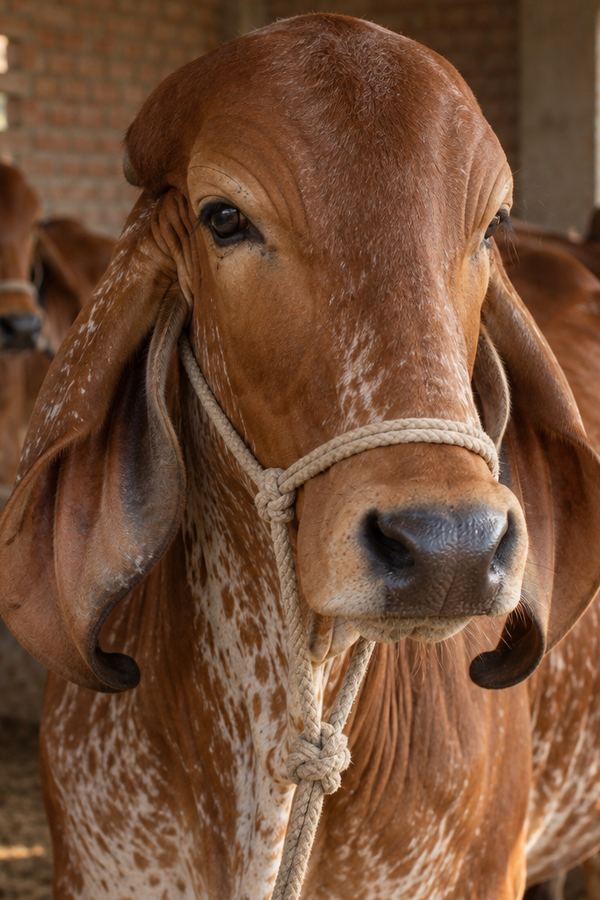
It is made from the milk of native Sahiwal and Gir cows, churned the bilona way in small batches. The milk comes from our own farms, and the ghee is made only from that milk: nothing is added.
How is it made?
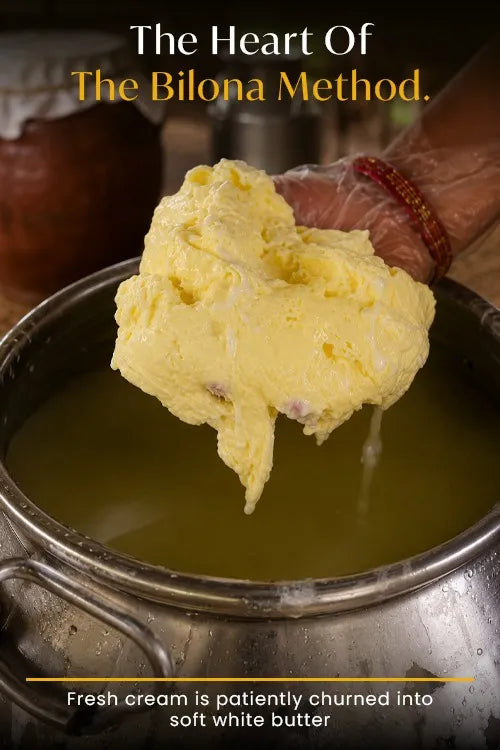
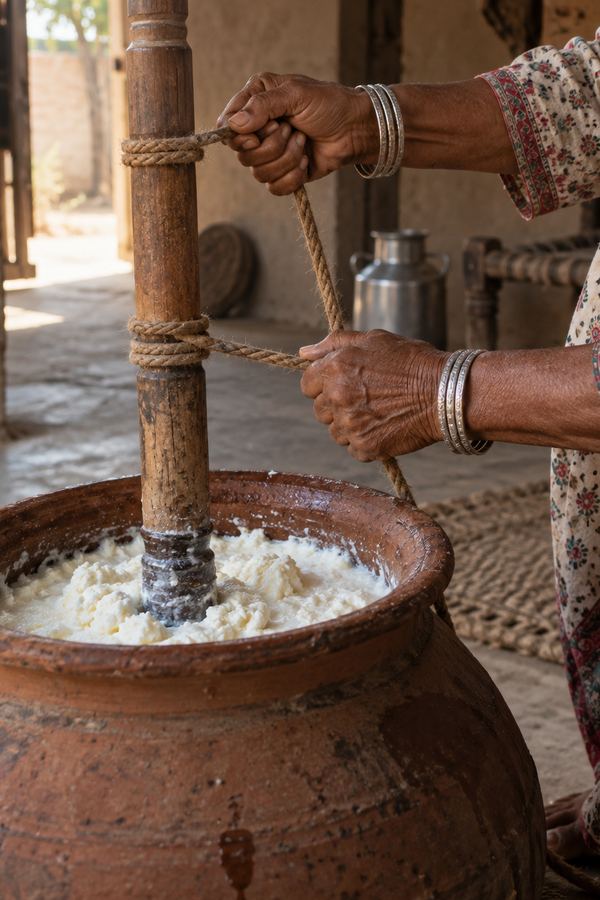
It starts with the milk of native Sahiwal and Gir cows, from our own farms across Haryana, Rajasthan, Punjab and Uttar Pradesh. The milk is set into curd and slow-churned in small batches at our unit in Sonipat, and the butter that gathers is simmered into ghee. It is made only from milk, with no preservatives, colours or vegetable fat added, and every batch is tested before it is packed.
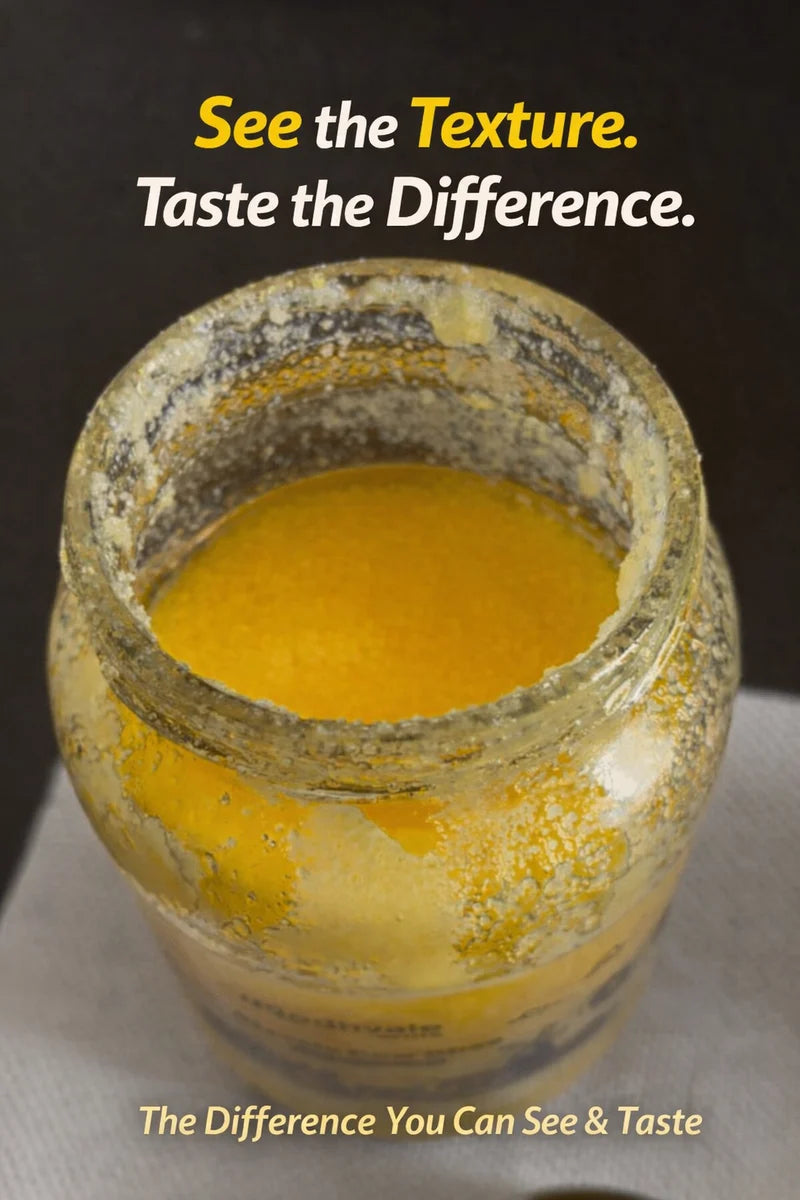
We keep the ghee as close to its natural state as possible, minimally processed, so its colour and grain can vary slightly with the season.
Want to see the method step by step? Read Bilona ghee: how it is made, step by step. Compare all our ghees on the desi ghee collection.
What does “bilona” mean?
Bilona is the traditional way of making ghee from curd instead of cream. The curd is churned until white butter gathers, and only that butter is slowly simmered into ghee. The churning step gives bilona ghee its aroma and its grainy, danedar texture.
Is A2 ghee the same as bilona ghee?
No. A2 describes the type of milk protein in the milk. Bilona describes the method. A ghee can be one, both or neither. Cow A2 Desi Ghee is made from the milk of native Sahiwal and Gir cows.
How are our ghees different from each other?
All of them are made the same way, in the same small batches at our Sonipat unit. Only the raw milk differs. Classic Cow Shuddh Bilona Ghee is made from cow milk, Cow A2 Desi Ghee from the milk of native Sahiwal and Gir cows, and Royal A2 Buffalo Desi Ghee from Murrah buffalo milk, for a richer, creamier body, and Pahadi A2 Cow Ghee from the milk of an indigenous cow breed native to the hills of Uttarakhand.
How do I use it?
Spoon it over hot rotis, dal and khichdi, use it for tadka, or stir it into halwa and laddoos. A little goes a long way, and the aroma is strongest when it is added at the end.
Why is the texture grainy, and why does the colour change?
Slow cooling lets the fat form crystals, so a grainy (danedar) texture is common, especially in cold weather. Warm it gently and it turns smooth again. Because we keep the ghee minimally processed, colour and grain can vary slightly with the season.
How should I store it?
Keep it in a closed, dry jar away from direct sun, and use a dry spoon every time.
Is every batch tested?
Yes. Every batch is tested before it is packed.

A clean, traditionally made ghee that fits well into a balanced diet. Purity and quality are what make this stand out.

When choosing ghee, I always look for authentic preparation and clean ingredients. This Bilona A2 ghee checks those boxes.

Good nutrition starts with choosing real, minimally processed foods. This is a great option for everyday cooking.
Not all ghee is made the same—quality makes the difference. Traditional Bilona preparation is a big plus here.
 Single-Origin
Farm
 70+ Quality
Checks
Single-OriginFarm
70+ QualityChecks


 Free Shipping Above 1500
 Secure Payments
 Farmers Empowerment
 COD Available
Free Shipping Above 1500
Secure Payments
Farmers Empowerment
COD Available
Choose options
Single-OriginFarm
70+ QualityChecks
Single-OriginFarm
70+ QualityChecks
Free Shipping Above 1500
Secure Payments
Farmers Empowerment
COD Available
Free Shipping Above 1500
Secure Payments
Farmers Empowerment
COD Available
Single-OriginFarm
70+ QualityChecks
Single-OriginFarm
70+ QualityChecks
Free Shipping Above 1500
Secure Payments
Farmers Empowerment
COD Available
Free Shipping Above 1500
Secure Payments
Farmers Empowerment
COD Available
What makes Cow A2 Desi Ghee different?
It is made from the milk of native Sahiwal and Gir cows, churned the bilona way in small batches. The milk comes from our own farms, and the ghee is made only from that milk: nothing is added.
How is it made?
It starts with the milk of native Sahiwal and Gir cows, from our own farms across Haryana, Rajasthan, Punjab and Uttar Pradesh. The milk is set into curd and slow-churned in small batches at our unit in Sonipat, and the butter that gathers is simmered into ghee. It is made only from milk, with no preservatives, colours or vegetable fat added, and every batch is tested before it is packed.
We keep the ghee as close to its natural state as possible, minimally processed, so its colour and grain can vary slightly with the season.
Want to see the method step by step? Read Bilona ghee: how it is made, step by step. Compare all our ghees on the desi ghee collection.
What does “bilona” mean?
Bilona is the traditional way of making ghee from curd instead of cream. The curd is churned until white butter gathers, and only that butter is slowly simmered into ghee. The churning step gives bilona ghee its aroma and its grainy, danedar texture.
Is A2 ghee the same as bilona ghee?
No. A2 describes the type of milk protein in the milk. Bilona describes the method. A ghee can be one, both or neither. Cow A2 Desi Ghee is made from the milk of native Sahiwal and Gir cows.
How are our ghees different from each other?
All of them are made the same way, in the same small batches at our Sonipat unit. Only the raw milk differs. Classic Cow Shuddh Bilona Ghee is made from cow milk, Cow A2 Desi Ghee from the milk of native Sahiwal and Gir cows, and Royal A2 Buffalo Desi Ghee from Murrah buffalo milk, for a richer, creamier body, and Pahadi A2 Cow Ghee from the milk of an indigenous cow breed native to the hills of Uttarakhand.
How do I use it?
Spoon it over hot rotis, dal and khichdi, use it for tadka, or stir it into halwa and laddoos. A little goes a long way, and the aroma is strongest when it is added at the end.
Why is the texture grainy, and why does the colour change?
Slow cooling lets the fat form crystals, so a grainy (danedar) texture is common, especially in cold weather. Warm it gently and it turns smooth again. Because we keep the ghee minimally processed, colour and grain can vary slightly with the season.
How should I store it?
Keep it in a closed, dry jar away from direct sun, and use a dry spoon every time.
Is every batch tested?
Yes. Every batch is tested before it is packed.
Doodhvale In Action


Doodhvale Farms · Sonipat, Haryana · Since 2017
Apni gaay.
Apne log.
Apna ghee.
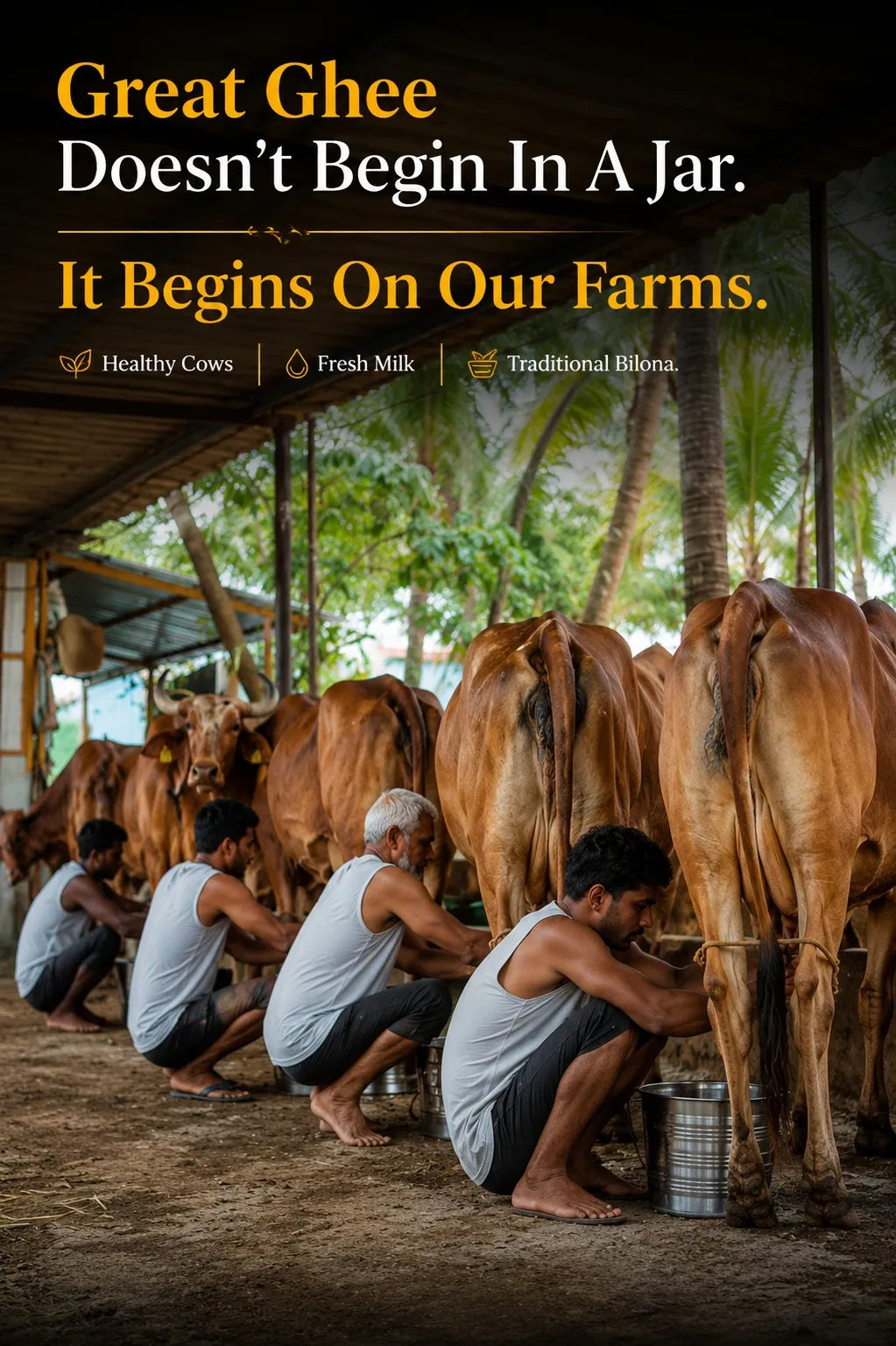
From our herd to the lid on your jar, every step happens at our own farm and dairy in Sonipat, by our own team.
- 27 acresour own farm
- 4,900+cows and buffaloes
- 40+people on the farm
- 2017the year we started
From our herd to your jar
Har kadam humara.
Every step happens on our own farm and in our own dairy, by our own team.
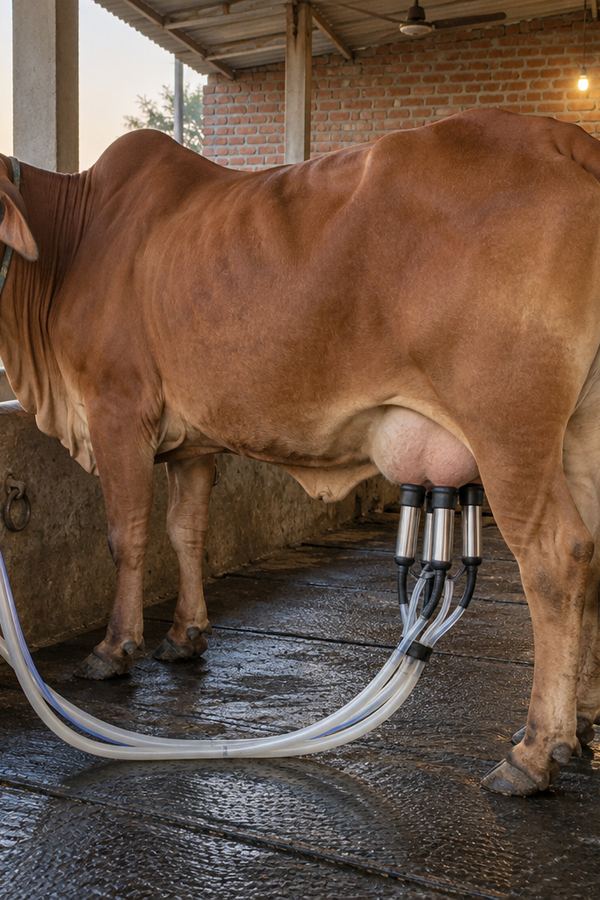
- No traders
- No milk collection centres
- No contract packers
The people behind your jar
Yeh hain apne log.
40+ people look after our herd and make your ghee. Meet three of them.
-
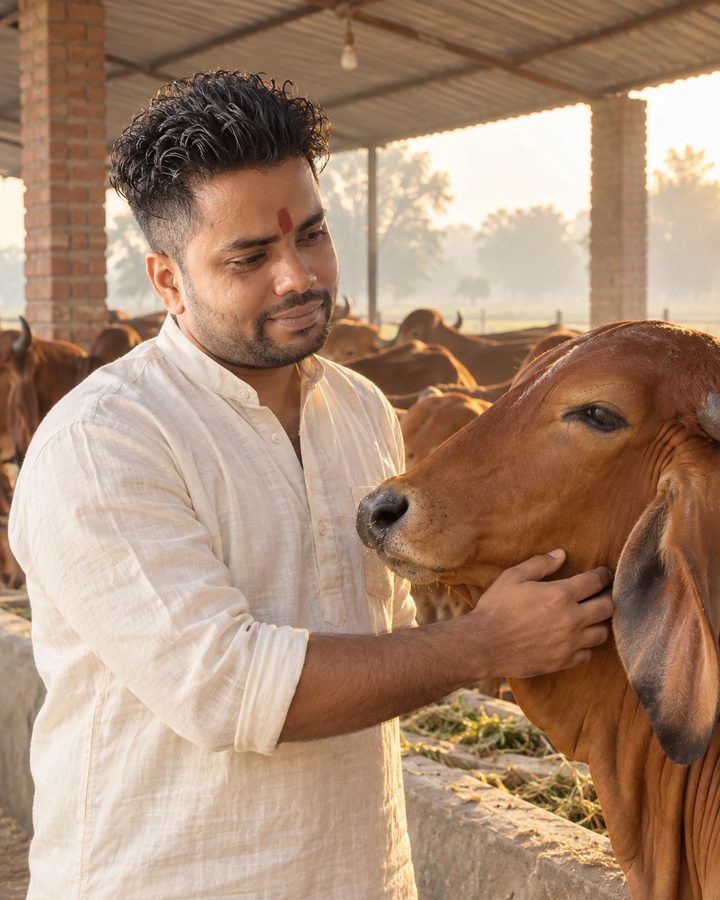 Gwala · cow care
Omkar
-
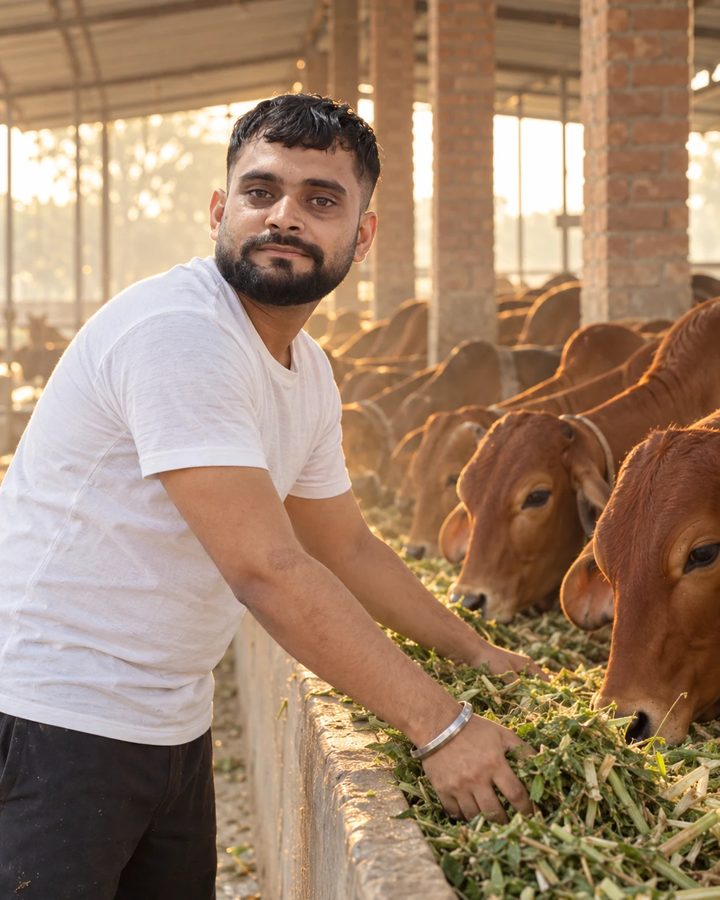 Gwala · cow care
Jaidev
-
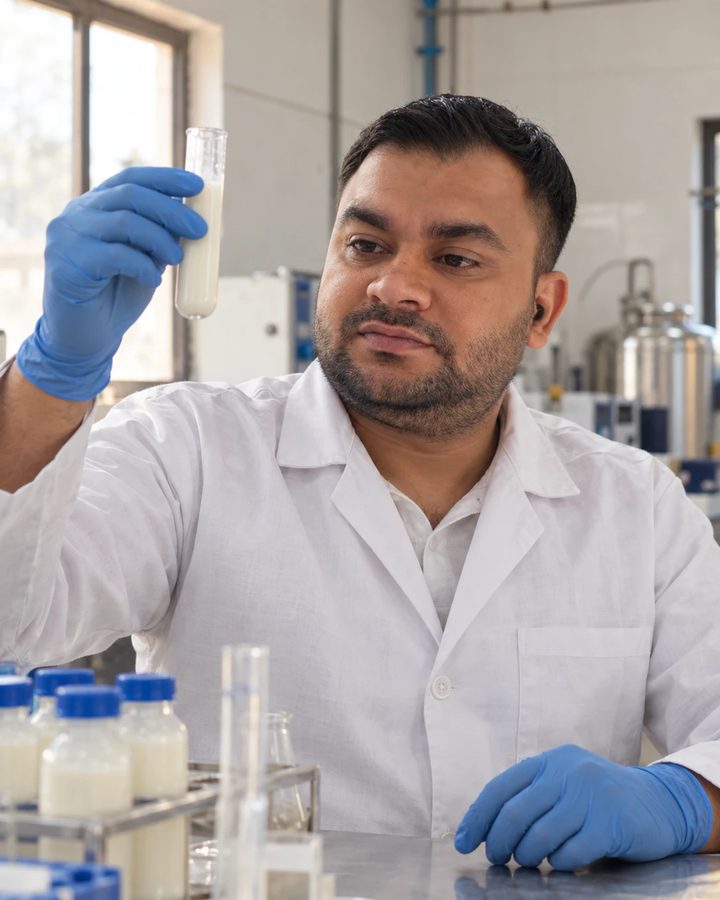 Quality · milk testing
Manoj
Khud dekh lijiye
See for yourself.
Our farm, since 201727 acres in Sonipat, Haryana
FSSAI licence and lab reportsAll in the Doodhvale app
Images are for representation.
Tradition in Every Spoon
Why Doodhvale™ Farms Ghee?
Frequently asked questions about our ghee
Bilona is the traditional slow-churning method of making ghee. We make every one of our ghees this way, in small batches at our own unit in Sonipat.
Only milk. Nothing is added: no preservatives, no colours and no vegetable fat.
From our own farms across Haryana, Rajasthan, Punjab and Uttar Pradesh. The process is the same for every ghee; only the raw milk differs by breed.
We keep our ghee as close to its natural state as possible and process it minimally, so the colour and grain can vary slightly with the season.
Yes. Every batch is tested before it is packed.
Daily lab reports are in the Doodhvale Farms app. Scan the QR code on our Lab Reports page to download it.


